Sunday, 21 July 2013

Roti Jala

roti jala,chicken curry, Malaysian, bread

My dear husband experienced roti jala for the first time in Malaysia at the home of a longtime friend in January of 2010.  He's been singing the praises of roti jala since then and they've been falling on deaf ears here. When we were there this past December,  he once again came upon the elusive roti jala at a hotel breakfast buffet in Penang where he also got to see how it is made - with something called a roti jala funnel.  He instantly recognized it as something that we have in our kitchen - "Wait... don't we have one of those at home?"  Uh-oh - nowhere to run,  nowhere to hide! The matter was settled as amicably as possible, with me trying to distract him with the buffet's magnificent display of dragon fruit and promising to provide roti jala on a regular basis once we got back to Brooklyn. So,  two nights ago,  we had our first roti jala adventure - made with freshly-squeezed coconut milk,  which is a whole other blog post. Let me just tell you that while it is normal to use only fresh coconut milk back home in Malaysia,  here in Brooklyn it's completely unheard of and we went to great lengths to make some. 
Roti jala is a quintessentially Malaysian dish - a combination of Malay and Indian influences,  it is a wonderful example of the fusion of cultures that is uniquely Malaysian. The batter is poured into a hot pan with the aforementioned funnel, resulting in a lacy,  crepe-like, melt-in-your-mouth bread that is prefect for soaking up a spicy curry gravy. As I write this,  I'm wishing we had leftovers. Perhaps we'll have to make it again this weekend?


Roti Jala (serves 5)
3 cups all-purpose flour  - sifted
3 eggs
3 cups coconut milk
1 1/2 cups water
1/2 tsp salt
1/2 tsp turmeric powder
Coconut oil - to grease the pan
In a large bowl, beat the 3 eggs.   Add the coconut milk,  water, salt and turmeric powder and whisk well. Slowly add the flour and stir to incorporate the wet and dry ingredients, until the batter comes to a smooth consistency. Strain the batter through a fine sieve to remove any lumps - this step ensures that the batter will pass through the funnel's multiple tiny outlets instead of clogging them up.
Heat up a flat griddle pan or large nonstick frying pan and then turn the heat to medium. Grease the pan lightly - I use coconut oil whenever possible,  but your choice of vegetable oil will do just as well.


roti jala,mould,batter,pan

Fill the roti jala funnel about halfway and let the batter drip onto the heated pan.  Beginning on the outer edge of the pan,  move the funnel in circles to create a lacy circular pattern.  My first couple of attempts at this were kinda miserable - the strands were thick and did not resemble the delicate roti jala we enjoyed back home.  It's all in the technique - with a little bit of practice, I managed to re-create these to perfection.  The trick is to keep that funnel moving quick - the slower you move,  the thicker the strands are.


roti jala,funnel,mould,Malaysian food

Here's a picture of the funnel - see the five pointy things on the bottom?  If you can't get your hands on one,  but are determined to try this recipe,  have someone who is handy with a hammer and a nail punch 5 small holes in the bottom of an empty can.  Make sure to hammer down any sharp edges and be careful.
And finally,  here's a pic of the roti jala served with my mum's incredible chicken curry - recipe to follow shortly.  I hope you'll make this and share it with your friends and family - it's really super easy and you'll look like a genius in the kitchen.

Saturday, 20 July 2013

Chicken Biryani

Chicken Biryani


Ingredients

Serves : 8 

  • 4 tablespoons ghee or vegetable oil
  • 4 small potatoes, peeled and halved
  • 2 large onions,peeled and finely chopped
  • 2 cloves garlic, crushed
  • 3 teaspoons finely grated fresh ginger root
  • 1/2 teaspoon chili powder
  • 1/2 teaspoon ground black pepper
  • 1/2 teaspoon ground turmeric
  • 1 teaspoon ground cumin
  • 1 teaspoon salt
  • 2 medium tomatoes, peeled and chopped
  • 2 tablespoons plain yogurt
  • 2 tablespoons chopped fresh mint leaves
  • 1/2 teaspoon ground cardamom
  • 1,5cm cinnamon stick
  • 1, kg boneless, skinless chicken pieces cut into chunks
  • For the Rice
  • 2 tablespoons (30ml) ghee or vegetable oil
  • 1 large onion, peeled and diced
  • 1 pinch powdered saffron
  • 5 pods cardamom
  • 3 whole cloves
  • 1, 2.5cm cinnamon stick
  • 1/2 teaspoon ground ginger
  • 500g basmati rice
  • 4 cups (1L) chicken stock
  • 1 1/2 teaspoons salt

Directions

Prep:30min  ›  Cook:1hr35min  ›  Ready in:2hr5min 

  1. In a large frying pan, in 2 tablespoons vegetable oil (or ghee) fry potatoes until brown Drain and reserve the potatoes.
  2. Add remaining oil to the pan and fry onion, garlic and ginger until onion is soft and golden. Add chili, pepper, turmeric, cumin, salt and the tomatoes. Fry, stirring constantly for 5 minutes.
  3. Add yogurt, mint, cardamom and cinnamon stick. Cover and cook over low heat, stirring occasionally until the tomatoes are cooked to a pulp. It may be necessary to add a little hot water if the mixture becomes too dry and starts to stick to the pan.
  4. When the mixture is thick and smooth, add the chicken pieces and stir well to coat them with the spice mixture. Cover and cook over very low heat until the chicken is tender, approximately 35 to 45 minutes. There should only be a little very thick gravy left when chicken is finished cooking. If necessary cook uncovered for a few minutes to reduce the gravy.
  5. Wash rice well and drain in colander for at least 30 minutes.
  6. In a large deep frying pan or saucepan, heat vegetable oil (or ghee) and fry the onions until they are golden. Add saffron, cardamom, cloves, cinnamon stick, ginger and rice. Stir continuously until the rice is coated with the spices.
  7. In a medium-size pot, heat the chicken stock and salt. When the mixture is hot pour it over the rice and stir well. Add the chicken mixture and the potatoes; gently mix them into the rice. Bring to boil.
  8. Cover the saucepan tightly, turn heat to very low and steam for 20 minutes. Do not lift lid or stir while cooking. Spoon biryani onto a warm serving dish.

Thursday, 18 July 2013

Kuih Seri Kaya

** Kuih Seri Kaya is a very popular steamed kuih. It has no added fat beside what’s in the coconut milk. The bottom layer is made of glutinous rice and the top green layer is a rich coconut egg jam.
Kuih Seri Kaya


Ingredients:
Bottom Layer
3 cups of glutinous rice, washed and soaked overnight with 1/4 tsp of salt added
1 cup of coconut milk
Pinch of salt
1 pandan (screwpine) leaf, tied in a knot
Top Layer
5 eggs
1 1/2 cups sugar
4 pandan (screwpine) leaves, cut into squares and pounded in a mortar and pestle with a teaspoon of water, then squeezed for the green essence of pandan
3 tbsp all-purpose flour
2 cups coconut milk
Green food coloring (optional)
1/4 tsp vanilla
Drain the soaked glutinous rice. In a wok with a steaming tray (or a large pot with steamer insert), boil water for steaming the rice. Place an 8″ or 10″ round cake pan in the steamer and let it heat up.  Once hot, add the rice, coconut milk, pinch of salt, and knotted pandan leaf. Cover and steam for 20 minutes. Uncover and stir well. Cover again and steam for another 10 minutes. Uncover, remove the pandan leaf, press down with a wooden spoon to level the almost cooked rice so it’s as flat as you can get it. Cover and steam for five more minutes.
While the rice is cooking, prepare the seri kaya mixture. Combine the eggs and sugar in a large bowl and mix well. Add the essence of pandan, flour, coconut milk, food coloring, and vanilla and mix until well combined. Pour this mixture through a fine sieve to remove any lumps. You definitely do not want lumpy seri kaya.
After the 35 minutes of steaming time for the glutinous rice, uncover your steamer and using a fork poke holes all over the cooked rice. This helps the seri kaya mixture to settle into the rice and stick to it instead of just sliding off. (Auria’s note: Haha, that’s an amazing newbie mistake that I’ve made myself. So funny now, but I definitely wasn’t laughing the first time I made this delicious dessert.)
Pour the seri kaya mixture onto the rice, cover and steam for 10 minutes. Uncover and stir gently, then cover and steam for another 30 minutes. Remove the pan from the steamer, and let it cool completely. The top layer may still jiggle as you move it, but it will harden and set as it cools.
Now this is the hardest part–wait for it to cool COMPLETELY before cutting into squares. Serve and enjoy!

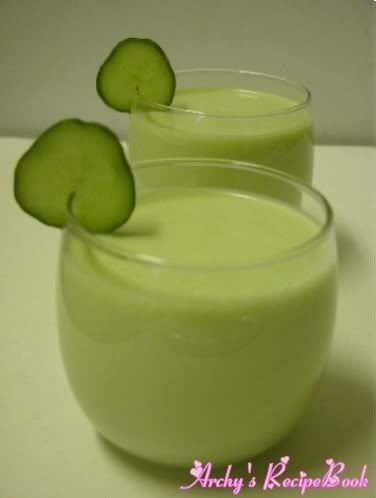
Moroccan Avocado Milkshake


Ingredients

* 2 to 3 cups cold milk
* 1 ripe avocado
* 3 tablespoons sugar
* handful of ice (optional)

Method

Peel the avocado and cut in half. Discard the pit. Put the avocado and sugar in a blender with 1 cup of milk. Blend until very creamy and smooth.

Gradually add another cup or two of milk to make the shake as thin or as thick as you like. How much milk you need will depend on the size of the avocado.

Add a handful of ice to the blender if you like your shake well-chilled, and blend for another minute. Pour into glasses, and serve.

Tuesday, 16 July 2013

Apple and Banana Milkshake Recipe - Moroccan Apple and Banana Smoothie

Apple and Banana Milkshake Recipe - Moroccan Apple and Banana Smoothie


Fruit milkshakes or smoothies are very popular in Morocco. Try this easy apple and banana shake recipe for a light and nutritious snack or as part of an iftar during Ramadan.
Serves 2 to 3.

Prep Time: 5 minutes

Total Time: 5 minutes

Ingredients:

  • 2 cups (about 1/2 liter) cold milk
  • 1 medium apple, peeled, cored and chopped
  • 1 medium banana, peeled and broken into several pieces
  • 2 tablespoons sugar, or to taste
  • handful of ice (optional)

Preparation:

Put the apple, banana and sugar in a blender with about 1/2 cup of milk. Blend until creamy and smooth.
Gradually add the remaining milk and blend just until well mixed and foamy. Add a handful of ice to the blender if you like your shake well-chilled, and blend for another minute to crush the ice.
Pour into glasses and serve.

Chicken Nuggets Recipe


INGREDIENTS :

Chicken boneless (chopped) 1/2 kg
Oil (for deep frying) as required
Black pepper 1/2 tsp
Garlic paste 1 tsp
Salt 1 tsp
Onion (small and chopped) 1
Plain flour 1/2 cup
Bread crumbs 1 cup
Egg 1


 How To Cook Chicken Nuggets :

1. Add chicken pieces in a pot.
2. Add garlic paste, black pepper and salt in it.
3. Also add onion in it and mix well.
4. Add this meat mixture in chopper to mince it.
5. Put in fridge for a while.
6. Make small nugget shapes from the meat.
7. Coat them in plain flour.
8. Beat an egg.
9. Dip in egg and then coat in bread crumbs.
10. Heat some oil in a pan.
11. Deep fry the nuggets.

Sunday, 14 July 2013

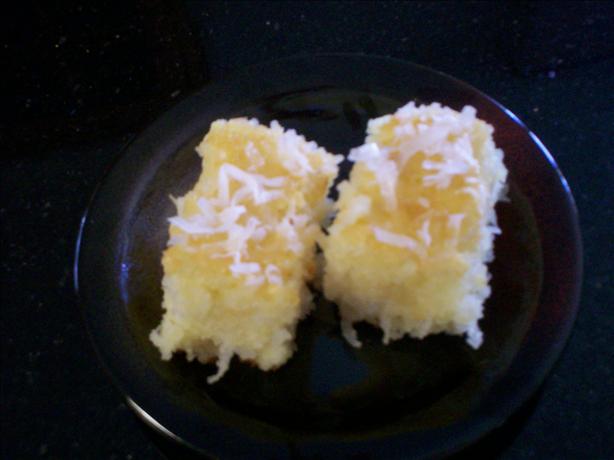
Ramadhan Special: Middle Eastern Coconut Cake (Harissah)

Middle Eastern Coconut Cake (Harissah). Photo by chef FIFI


Prep Time: 10 mins

Cook Time: 30 mins
Total Time: 40 mins


Ingredients:

Harissa

2 cups sugar
6 eggs
2 cups corn oil
1 1/2 cups milk
2 tablespoons baking powder
1 dash vanilla
1 teaspoon lemon juice
2 cups flour
4 cups of shredded unsweetened coconut (usually found in middle eastern stores)

Syrup

2 cups water
2 cups sugar
1 dash vanilla

Directions:

1
First make syrup by boiling water and sugar for about 5 to 10 minutes depending on how heavy you may want it but it shouldn't be any thicker than pancake syrup in consistency.
2
*You may also add a tsp of rose water or orange blossom to it to give more of a traditional middle eastern dessert taste (I personally can do without it so that's why my recipe doesn't call for it under the ingredients).
3
When done with that process set syrup aside to cool.
4
Start on the Harissa by combining sugar,eggs,oil,milk,vanilla,lemon juice and mix them together until blended.
5
Then add flour and baking powder to mixture and blend well.
6
Lastly you want to STIR coconut into batter.
7
Then its time to add to greased and floured pan (never a bundt pan)-- an oblong pan will do.
8
Bake for about 30 minutes at 350°F or more until a light/medium golden brown.
9
When cake is done and still hot pour syrup all over cake in pan.
10
You don't have to use all the syrup but at least 3/4 should be used on the cake.
11
Let cool, then cut in slanted squares.
12
Then remove each piece onto a tray.
13
You can garnish with a little shredded coconut on top for presentation.